


In the world of audio technology, vacuum tube amplifiers hold a unique charm that captivates audiophiles and musicians alike. These vintage devices, once the backbone of radio and television, have made a remarkable comeback, celebrated for their warm sound and rich tonal qualities. Unlike their modern solid-state counterparts, vacuum tube amplifiers offer a distinct character that many believe enhances the listening experience.
As enthusiasts delve into the nuances of sound reproduction, they often find themselves drawn to the organic warmth and dynamic range that tubes provide. The revival of interest in these amplifiers isn’t just a nostalgic trip down memory lane; it’s a testament to their enduring appeal in an age dominated by digital technology. Whether used in home audio systems or professional studios, vacuum tube amplifiers continue to inspire and elevate sound, proving that some classics never go out of style.
Overview of Vacuum Tube Amplifiers
Vacuum tube amplifiers hold a significant place in the audio technology realm, appreciated for their distinct sound characteristics. Their historical roots and fundamental working principles contribute to their timeless appeal.
History of Vacuum Tube Technology
Vacuum tube technology dates back to 1904 when John Ambrose Fleming invented the first vacuum tube, known as the Fleming valve. This device marked the beginning of electronic amplification. In the 1920s, vacuum tubes became critical for radio broadcasting and public address systems, reshaping the audio landscape. During the mid-20th century, vacuum tube amplifiers gained prominence in home audio and music production. Their warm tone and harmonic distortion offered a unique sound that solid-state amplifiers could not replicate. Despite the rise of transistor technology in the late 1960s, vacuum tubes maintained a dedicated base, especially among audiophiles and professionals who treasure their analog sound.
Basic Working Principle
Vacuum tube amplifiers operate on a straightforward methodology involving the flow of electrons. A vacuum tube consists of an anode, cathode, and control grid. Heating the cathode causes it to emit electrons into the vacuum. The control grid, positioned between the anode and cathode, modulates electron flow, allowing for amplified signals. The interaction between these components produces gain, resulting in a more powerful audio output. Various configurations of vacuum tubes, such as triodes and pentodes, further enhance performance by improving efficiency and bandwidth. This unique design contributes to the fuller, more textured sound profile that enthusiasts seek in vacuum tube amplifiers.
Types of Vacuum Tube Amplifiers
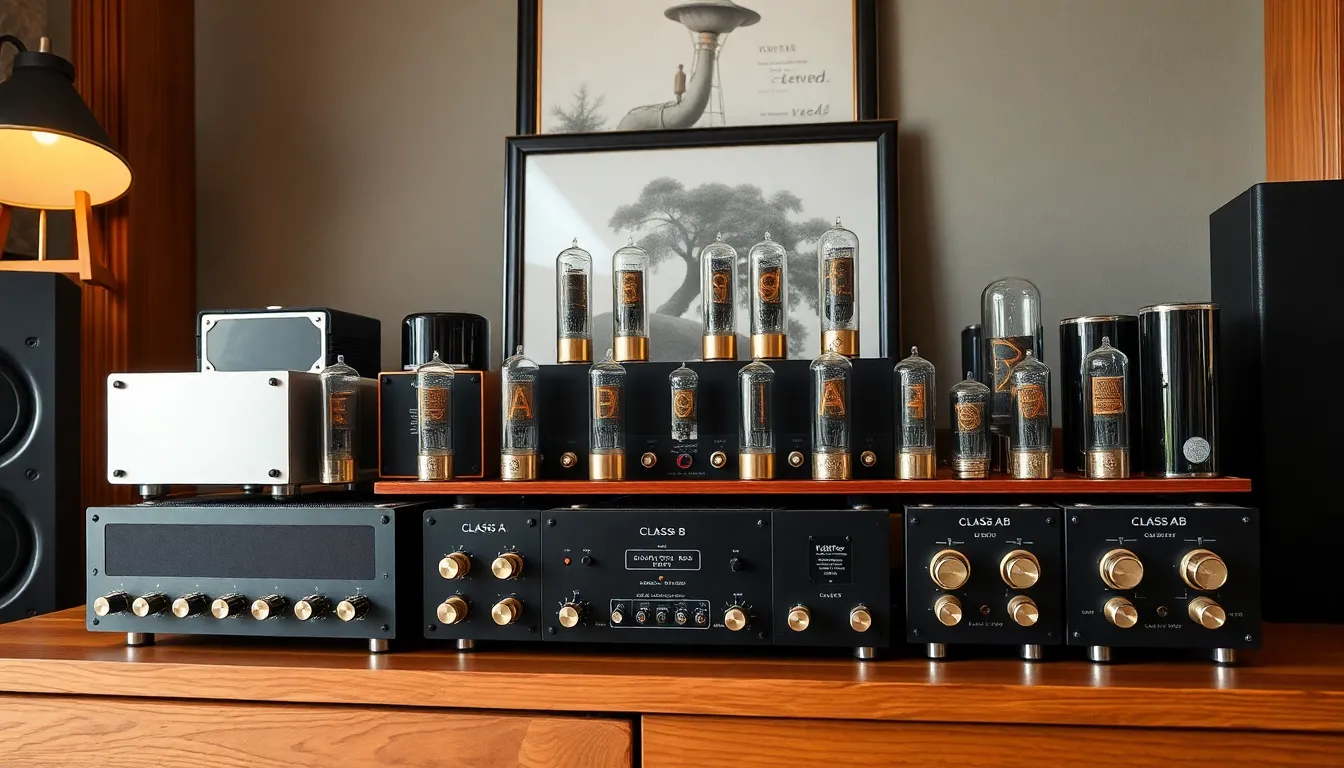
Vacuum tube amplifiers come in several classifications, each with unique characteristics and applications. These classifications include Class A, Class B, Class AB, and Class C amplifiers.
Class A Amplifiers
Class A amplifiers operate by biasing the output stage, allowing current to flow continuously through the tubes. This continuous flow ensures low distortion and high linearity, producing a warm and rich audio quality. Class A designs typically exhibit high idle power consumption, making them less energy-efficient. However, they provide excellent performance in home audio systems and studios, where sound fidelity is paramount. For instance, popular models from brands like McIntosh and Audio Research exemplify the qualities of Class A amplifiers.
Class B and AB Amplifiers
Class B amplifiers utilize a push-pull configuration, where each tube conducts for half of the input waveform. This design enhances efficiency and reduces heat generation compared to Class A. Class AB amplifiers blend characteristics from both Class A and Class B, providing a compromise between sound quality and efficiency. They operate in Class A at lower output levels and switch to Class B at higher levels, balancing performance and power consumption. Commonly used in guitar amplifiers, models like the Fender Twin Reverb illustrate the versatility of Class AB amplifiers.
Class C Amplifiers
Class C amplifiers operate with significant signal clipping and are most efficient at producing high power output. They conduct for less than half the input waveform cycle, making them unsuitable for audio amplification but well-suited for RF applications. These amplifiers find their place in broadcasting and transmission systems, delivering high efficiency. An example of a Class C vacuum tube amplifier is the one used in amateur radio transmissions, where efficiency outweighs audio fidelity.
Advantages of Vacuum Tube Amplifiers
Vacuum tube amplifiers offer unique benefits that appeal to audio enthusiasts. These advantages significantly contribute to their enduring popularity.
Sound Quality
Sound quality remains a key advantage of vacuum tube amplifiers. They produce a harmonic distortion that many listeners perceive as more musical and pleasant compared to solid-state amplifiers. The distortion introduced by vacuum tubes tends to create a richer audio experience, allowing for greater depth and detail in sound reproduction. Additionally, vacuum tube amplifiers excel in reproducing high frequencies, giving vocals and instruments an airy presence. An example includes high-end stereo systems that use tube preamps to enhance the listening experience in homes and professional studios.
Warmth and Character
Warmth and character closely define the appeal of vacuum tube amplifiers. The analog nature of tube amplification imparts a softer, more inviting sound that stands in contrast to the often sterile output associated with digital equipment. Musicians and audiophiles appreciate how these amplifiers reproduce subtle nuances and emotional content in music. Many vintage tube amplifiers are celebrated for their ability to add a pleasing saturation, particularly in electric guitars and vocals, making them the go-to choice for genres like rock and jazz. Their distinctive tonal quality transforms mundane listening into an engaging experience, allowing listeners to connect deeply with the music.
Disadvantages of Vacuum Tube Amplifiers
Despite their unique sound characteristics and vintage appeal, vacuum tube amplifiers present several disadvantages. Users should consider maintenance requirements, size, and weight when evaluating these amplifiers.
Maintenance and Durability
Maintenance can pose a significant challenge with vacuum tube amplifiers. Tubes often require periodic replacement, typically every few months to a few years, depending on usage. Users must regularly inspect tubes for signs of wear, which may include reduced audio quality or odd noises. Furthermore, vacuum tubes operate at high voltages, making them potentially hazardous during handling or replacement. Users should approach maintenance with caution or seek professional help to ensure safe operation. Overall, this increased need for care can be a deterrent for those preferring a low-maintenance audio solution.
Size and Weight Considerations
Size and weight are critical factors when assessing vacuum tube amplifiers. These devices tend to be larger and heavier than modern solid-state amplifiers due to the bulky components and transformers used in their construction. The additional weight can complicate transportation and installation, especially in home audio setups or live-performance environments. While some users appreciate the aesthetic of large, vintage designs, others may prioritize portability and convenience, making solid-state alternatives a more attractive option.
Vacuum tube amplifiers continue to captivate audio enthusiasts and musicians alike. Their rich tonal qualities and warm sound create an inviting listening experience that many find unmatched by modern alternatives. Despite the challenges of maintenance and size, the unique character of these vintage devices ensures their place in the hearts of those who appreciate analog sound.
As technology evolves, the allure of vacuum tube amplifiers remains strong. Their historical significance and the emotional depth they bring to music make them timeless pieces of audio equipment. For anyone seeking to enhance their audio experience, exploring the world of vacuum tube amplifiers is a rewarding journey worth taking.