
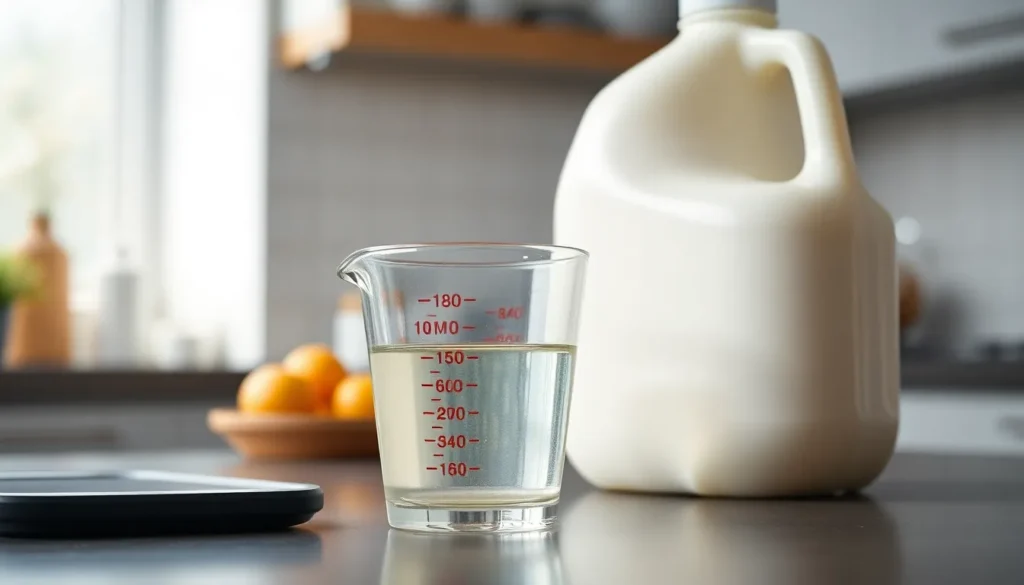

Understanding liquid measurements is essential in everyday life, whether cooking, mixing drinks, or managing household supplies. One common question that often arises is how many ounces make a gallon. This seemingly simple inquiry can lead to confusion, especially with varying measurement systems in use.
In the United States, a gallon is a standard unit of measurement that holds significant importance in both culinary and commercial contexts. Knowing the conversion from ounces to gallons can streamline recipes and ensure accurate portioning. This article will clarify the relationship between these two measurements, making it easier for anyone to navigate their liquid measurement needs with confidence.
Understanding Gallons and Ounces
Understanding gallons and ounces is essential for accurate liquid measurement in cooking and various tasks. These units represent quantities commonly used in everyday scenarios, requiring clarity in their definitions and conversions.
Definition of a Gallon
A gallon is a unit of volume primarily used in the United States and other countries. In the U.S. measurement system, one gallon equals 128 fluid ounces. It serves as a standard measurement for liquids like milk, water, and gasoline. The gallon can be further divided into four quarts, eight pints, or sixteen cups, facilitating easier conversions across different liquid measurements.
Definition of an Ounce
An ounce is a smaller unit of volume used to quantify liquids. In the U.S. system, one fluid ounce equals 1/128 of a gallon. It is widely used in cooking, beverage servings, and nutritional labeling. Understanding ounces helps in precise measurement of ingredients or serving sizes, aiding in effective meal preparation and portion control.
Converting Ounces to Gallons
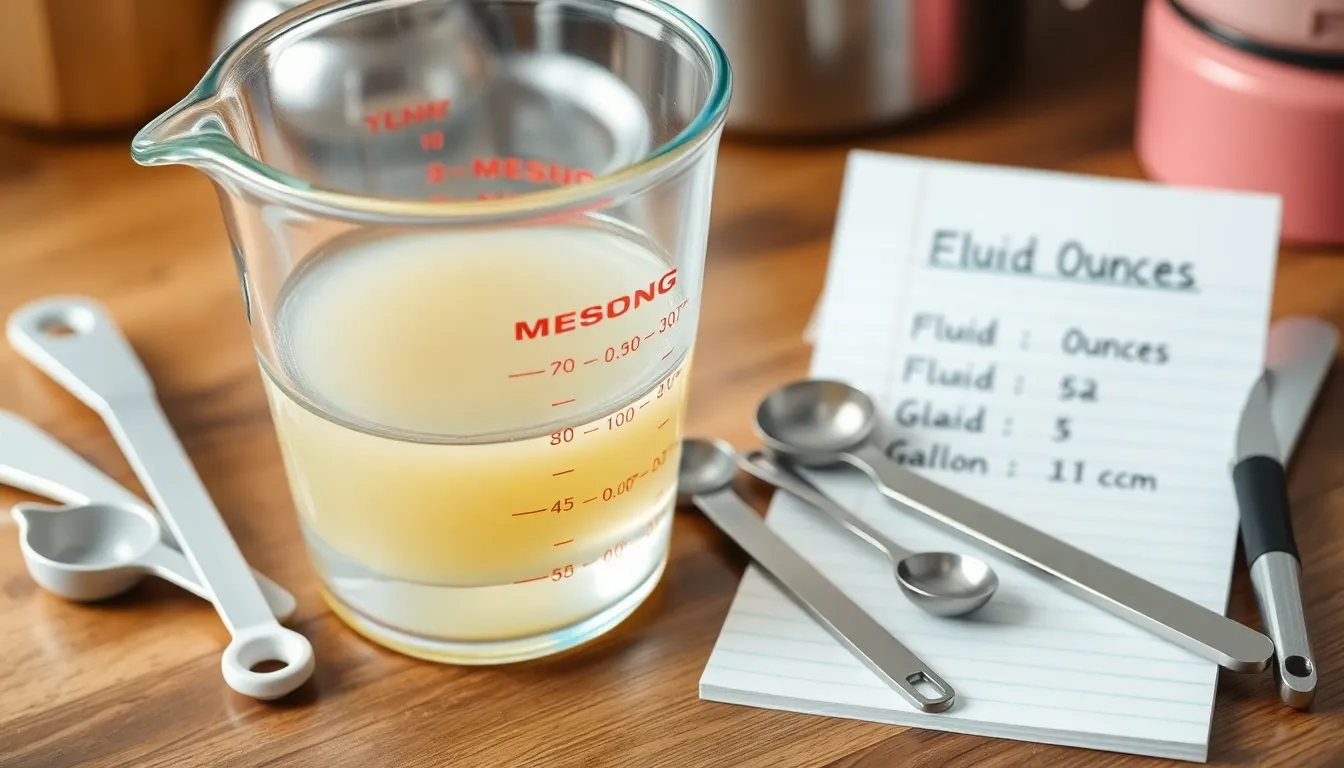
Understanding the conversion between ounces and gallons simplifies many tasks in cooking and managing liquids. The relationship between these measurements is straightforward, making it easy to apply in various situations.
The Formula for Conversion
To convert ounces to gallons, the formula is simple:
[
text{Gallons} = frac{text{Ounces}}{128}
]
This formula shows that one gallon consists of 128 fluid ounces. For instance, to convert 64 ounces to gallons, divide 64 by 128, resulting in 0.5 gallons. This method can be applied for any quantity of fluid ounces.
Practical Examples of Conversion
Here are practical examples of converting ounces to gallons:
- 32 ounces equals 0.25 gallons.
- 128 ounces equals 1 gallon.
- 192 ounces equals 1.5 gallons.
- 256 ounces equals 2 gallons.
Using these examples, individuals can quickly determine how many gallons correspond to different measurements in ounces, which enhances accuracy in cooking and supply management tasks.
Common Uses for Gallons and Ounces
Understanding the relationship between gallons and ounces aids in various practical applications. Gallons and ounces play crucial roles in both cooking and beverage measurement.
Cooking and Baking
Cooks often rely on precise measurements for consistent results. Recipes frequently use ounces for smaller quantities but may call for gallons when preparing large batches. For instance, a recipe for soup may require 1 gallon of broth, while a baking recipe might specify 8 ounces of flour. Knowing that 1 gallon equals 128 ounces helps cooks easily convert between these units, ensuring accuracy in ingredient quantities.
Beverage Measurement
Beverage servings often utilize ounces and gallons to standardize portions. Many containers, such as milk jugs or juice bottles, are sold in gallons, while cups or glasses use ounces for serving sizes. For example, a gallon of juice contains 128 ounces, providing 16 eight-ounce servings. This clarity aids in inventory management for businesses like restaurants and cafes, allowing them to track beverage usage efficiently.
Importance of Accurate Measurements
Accurate measurements play a crucial role in multiple aspects of daily life. In cooking, precision ensures consistency in flavor and texture, leading to successful dishes. Recipes often rely on exact quantities, where a mere ounce discrepancy can alter the outcome.
In commercial settings, knowing how many ounces make a gallon helps with inventory management and cost calculations. Businesses benefit from precise measurements when tracking stock and managing resources efficiently. Without this accuracy, failures in estimating ingredient needs can occur, leading to waste or shortages.
Understanding the relationship between ounces and gallons promotes better decision-making. For instance, using the conversion of 128 fluid ounces per gallon, it becomes simpler to assess consumption or purchase requirements. This clarity reduces confusion not only for individuals but also for professionals in food service and retail environments.
Additionally, accurate measurements support health and safety guidelines, especially in food preparation. Proper serving sizes, often determined in ounces, aid in maintaining nutritional standards. This approach caters to dietary needs, reinforcing the significance of precise volume measurement in promoting overall well-being.
Understanding the conversion between ounces and gallons is vital for anyone involved in cooking or managing liquid supplies. With a gallon equaling 128 fluid ounces this knowledge simplifies meal preparation and inventory management. Whether in a home kitchen or a commercial setting knowing how to accurately measure liquids ensures consistency and efficiency.
This clarity not only enhances culinary results but also aids in maintaining health and safety standards. By mastering these measurements individuals and businesses alike can make informed decisions that promote better outcomes in their daily activities.