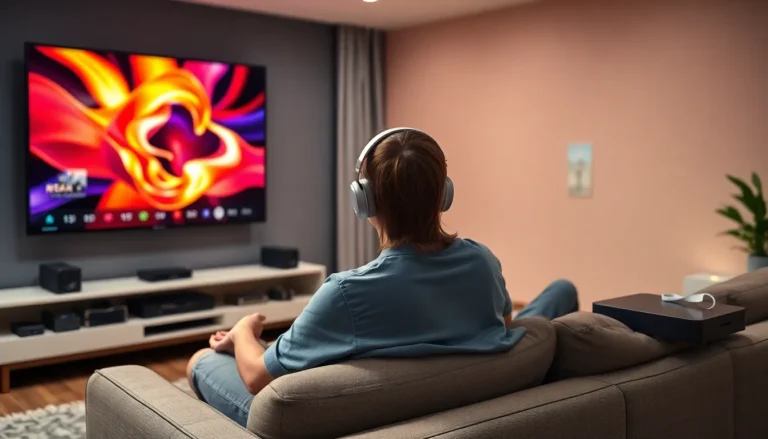


In a world where a picture is worth a thousand words, audio visual technology takes that concept and cranks it up to eleven. Whether it’s a high-stakes presentation or a cozy movie night, the right tech can transform mundane moments into unforgettable experiences. Imagine dazzling your audience with crystal-clear visuals while they’re wrapped in immersive sound that makes them feel like they’re part of the action.
But let’s be real: navigating the sea of gadgets and gizmos can feel like trying to find a needle in a haystack—while blindfolded. Fear not! This guide will break down the essentials of audio visual technology, making it as easy as pie (and who doesn’t love pie?). Get ready to elevate your events and home entertainment like never before.
Overview of Audio Visual Technology
Audio visual technology blends sound and visuals to enhance experiences across various settings, including events and home life. This technology comprises several components, such as projectors, microphones, speakers, and screens. Projectors display high-quality images, making them essential for presentations in conference rooms or classrooms.
Microphones capture sound, ensuring clarity in speeches and performances. They come in various types, including handheld, lapel, and shotgun microphones. Speakers deliver audio, making it vital for movie nights, concerts, and public announcements. The choice of speakers directly impacts sound quality, influencing overall audience engagement.
Streaming devices play a crucial role in modern audio visual setups. These devices connect to the internet, allowing access to various content platforms. Examples of popular streaming devices include Roku, Apple TV, and Chromecast. Choosing the right device enhances accessibility and user experience.
Visual clarity also relies on screen selection. Options range from LED TVs to large projection screens, each suited for different environments. Understanding the size and resolution of screens ensures optimal viewing experiences. For instance, a home theater may benefit from a large 4K projection screen.
Integration of components simplifies control. Users can operate multiple devices through a single interface, streamlining the audio visual setup. Platforms that facilitate this integration include control systems like Crestron and AMX.
Ultimately, selecting the right audio visual technology enhances engagement. By prioritizing quality components, individuals can create memorable experiences for presentations and social gatherings.
Applications of Audio Visual Technology

Audio visual technology plays a crucial role across different sectors. It enhances communication and engagement, making experiences more impactful.
Education
In education, audio visual technology transforms traditional teaching methods. Interactive whiteboards engage students in lessons through dynamic visuals and sounds. Video conferencing tools enable remote learning, connecting students and teachers regardless of location. Multimedia presentations provide a richer understanding of subjects, enabling creative expression during student projects. Learning management systems often incorporate video materials, which enhance comprehension and retention of information.
Corporate
Corporate environments benefit significantly from audio visual setups. Conference rooms equipped with large screens promote collaboration during meetings. Video walls provide impactful displays for presentations, ensuring visibility for all participants. Additionally, webinars utilize audio visual technology to reach wider audiences, facilitating knowledge sharing beyond physical boundaries. Digital signage serves as an effective communication tool, enhancing internal messaging and branding within office spaces.
Entertainment
Entertainment industries utilize audio visual technology to create immersive experiences. Movie theaters rely on high-definition projectors and advanced sound systems to captivate audiences. Home theaters use a combination of screens and surround sound systems, enhancing the viewing experience at home. Streaming services leverage audio visual technology to deliver high-quality content, allowing users to enjoy movies and shows anytime, anywhere. Live concerts integrate sophisticated sound and light equipment, captivating attendees through auditory and visual elements.
Benefits of Audio Visual Technology
Audio visual technology provides several key advantages that enhance experiences in various contexts. The following subheadings delve into specific benefits.
Enhanced Engagement
Audio visual technology captivates audiences effectively. Interactive elements draw viewers in, whether during a presentation or a movie night. It fosters participation, making sessions more dynamic. Visual aids such as charts and videos help convey messages clearly. In educational settings, students engage more actively with multimedia content. Events featuring engaging visuals and sound maintain audience attention longer. Surveys indicate that presentations incorporating AV elements result in higher retention rates. Overall, integrating audio and visual components creates memorable experiences that resonate with audiences.
Improved Communication
Effective communication relies on clear audio visual technology. Sound clarity is critical for delivering messages in conferences or meetings. Quality microphones ensure every voice is heard, enhancing dialogue. Furthermore, projectors and screens promote visual clarity, reinforcing spoken words. Organizations benefit from clear messaging through digital signage and video calls. These tools simplify complex information, making it accessible to diverse audiences. In corporate settings, improved communication fosters collaboration among teams. Overall, audio visual technology bridges gaps and streamlines interactions across various platforms.
Challenges in Audio Visual Technology
Audio visual technology presents unique challenges despite its advantages. Budget constraints often limit access to high-quality equipment, affecting installation and setup decisions.
Budget Constraints
Budget constraints frequently hinder access to cutting-edge equipment. Organizations often prioritize essentials over premium products, effectively impacting the overall quality of audio visual experiences. Cost-effective options, while available, can compromise performance. Additionally, ongoing maintenance for high-end technology increases financial burdens. Finding the right balance between affordability and quality remains a common challenge. Organizations benefit from researching financing options and assessing total cost of ownership rather than just initial purchase prices. Efficient budgeting ensures they allocate sufficient resources for desired equipment.
Technological Advancements
Technological advancements in audio visual technology introduce complexities. Rapid developments often outpace users’ capacity to adapt, leading to gaps in understanding. Upgrading systems frequently requires extensive training for personnel, which can be time-consuming. Compatibility issues between old and new devices also pose challenges, causing potential disruptions in functionality. Staying informed about the latest innovations becomes crucial for maximizing investment. Organizations interested in incorporating the latest tech should evaluate necessary upgrades and assess current system capabilities. Overall, keeping pace with advancements can ensure they maintain a competitive edge.
Future Trends in Audio Visual Technology
Emerging trends are reshaping audio visual technology across multiple sectors. Augmented reality (AR) and virtual reality (VR) are significantly transforming user interactions, creating immersive experiences that enhance learning and entertainment. With AR, users can overlay digital information onto their real-world surroundings, facilitating engaging educational tools. VR completely immerses users, transporting them into simulated environments that promote deep engagement.
Additionally, advancements in artificial intelligence (AI) streamline content delivery and improve user experiences. AI algorithms analyze viewer preferences, offering personalized content recommendations and optimizing visual and audio settings in real-time. This technology significantly enhances interactions in corporate settings and public displays, ensuring relevant content reaches targeted audiences.
Furthermore, 8K resolution displays are gaining traction, offering unparalleled clarity and detail. These ultra-high-definition screens provide lifelike images, making them ideal for both commercial and home environments. As more content becomes available in 8K, organizations prioritize upgrades to stay ahead in the market.
Sustainability is also becoming increasingly important in audio visual technology. Eco-friendly products and energy-efficient systems promote a greener approach, with manufacturers focusing on reducing carbon footprints. Adoption of energy-saving solutions not only conserves resources, but also decreases operational costs over time.
Wireless technology facilitates seamless connectivity among devices. This trend simplifies installation and enhances user convenience, allowing for quick access and control of audio visual setups. As technology evolves, organizations that invest in updated solutions can significantly enhance their performance and audience engagement.
The audio visual landscape is rapidly evolving, driven by innovations like AR, AI, and sustainable practices. Organizations prioritizing these trends can create more engaging, immersive experiences while ensuring they meet the demands of modern audiences.
Audio visual technology continues to transform how people experience communication and entertainment. By leveraging the latest advancements and understanding essential components, individuals and organizations can create engaging environments that captivate audiences.
As trends like AR and VR emerge alongside innovations in AI and 8K displays, the future of audio visual technology looks promising. Embracing these developments not only enhances user experiences but also ensures relevance in an ever-evolving landscape.
Investing in quality equipment and staying informed about new technologies will empower users to maximize their audio visual setups, ultimately leading to memorable moments and improved interactions across various settings.